


A PhD Is More Than Academia: A Toolbox of Skills for Every Career!
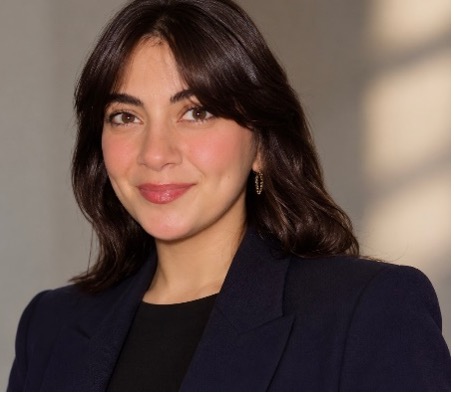

Could you please describe your background?
My academic journey started in Lebanon, where I pursued a Bachelor's degree in Chemical Engineering at the Holy Spirit University of Kaslik (USEK). During my final semester, I had the opportunity to move to France and complete my final-year internship at the LAGEPP laboratory in Lyon (Université Claude Bernard Lyon 1).
This experience turned out to be a particularly important turning point in my career. Until then, I had not necessarily envisioned myself pursuing a career in research. However, being immersed in a research environment, discovering how scientific questions are formulated and investigated, and participating in the daily life of a laboratory made me realize that I genuinely enjoyed it. It also made me appreciate how valuable research internships can be for engineering students. We often think of internships as a way to discover industrial environments, but experiencing research firsthand can be just as important when deciding on a future career.
I enjoyed the experience so much that I decided to continue in the same laboratory for my PhD. Following the national doctoral recruitment competition, I was fortunate enough to secure a doctoral position and continue working on the research topic (modeling emulsions) I had started exploring during my internship.
Having already spent time in the laboratory before beginning my doctorate was a real advantage. It allowed me to become familiar with the subject, the experimental environment and the research team, giving me a head start and allowing me to approach the first years of my PhD with greater confidence. It also gave me more opportunities to explore activities beyond my research, particularly teaching through the Activités Complémentaires d'Enseignement (ACE) programme, as well as participating in scientific networks, working groups and research organisations related to my field.
How hard is it to balance your time during the PhD?
I would say that one of the particularities of a PhD is that, even when you are not physically working, your mind is often still somewhere in the research!
On the professional side, doctoral research involves juggling several activities: reading the literature, keeping up with both recent publications and older foundational studies (sometimes dating back decades!), conducting experiments, analyzing results and interpreting them. And then comes perhaps the most interesting part: reflecting on what the results actually mean, identifying new questions and finding possible explanations or solutions. Sometimes, the best ideas come unexpectedly, while walking, brushing your teeth or even trying to fall asleep. Research is intriguing and has a way of staying in the background of your mind.
That said, I strongly believe that maintaining a balance between professional and personal life is not only possible but essential. One thing I learned is the importance of deliberately planning time off. Having days when you genuinely disconnect from work is just as important as organizing your working days. Rest is not wasted time; it is part of what allows you to remain productive, motivated and creative in the long run.
Personally, I also find it helpful to divide my working days between different types of activities rather than spending the entire day on a single task. Alternating between reading, experimental work, data analysis, writing or teaching helps me maintain a certain rhythm. Of course, everyone eventually needs to find the organization that works best for them. In my opinion, the first few months of a PhD are also about discovering your own working habits and learning how to manage your time.
Finally, I would emphasize the importance of social interactions. Participating in scientific associations, research groups, conferences and seminars, and simply taking the time to talk to people around you, can make a huge difference. These exchanges are not just opportunities to develop professionally; they also make the PhD experience much more enjoyable and remind us that research is rarely a solitary adventure.
What qualities do you think are necessary to succeed in a PhD?
The first quality that comes to mind is perseverance, followed closely by patience.
Research rarely follows the path we initially imagine. Experiments fail, hypotheses turn out to be incorrect, results sometimes contradict what we expected, and certain questions can remain unanswered for a long time. Learning to accept this uncertainty is an essential part of becoming a researcher.
I also believe that having an optimistic mindset is important. A result that does not match our expectations is not necessarily a bad result. Sometimes, understanding why something does not work is just as valuable as demonstrating that it does. Every unsuccessful attempt can provide information, help us refine our methods or lead us towards a completely different interpretation.
Another important quality is self-confidence, particularly when facing setbacks. A PhD is, above all, a learning experience. We are not expected to know everything from the beginning, nor to be experts in every aspect of our subject. It is easy to fall into the trap of imposter syndrome, comparing ourselves with more experienced researchers or feeling that we should constantly be performing at our best.
But we should remember that even the most accomplished scientists have experienced failures, doubts and unsuccessful experiments along the way. What matters is not avoiding mistakes, but learning from them and continuing to move forward.
So, if I had to give one piece of advice, it would be: trust the process, be patient with yourself and never underestimate how much you can learn from the things that do not go as planned.
How can PhD students prepare for a career in industry?
First, I think it is important to move away from the idea that pursuing a PhD necessarily means committing to an academic career for life. A doctorate does not close the door to industry; quite the opposite. It can open opportunities in industrial research and development, engineering departments, innovation, project management and many other professional environments.
One thing I would particularly like to emphasize is that accepting an engineering position after a PhD should never be perceived as a step backwards or as a failure to make use of one's doctoral experience. A PhD develops much more than specialized scientific knowledge. It involves intellectual, technical and methodological skills, but also project management, problem-solving, critical thinking, autonomy and the ability to work through complex challenges with incomplete information.
Of course, preparing for a career outside academia also requires being proactive. Beyond developing technical expertise, it is important to become familiar with industry-relevant tools, software and methodologies, while also developing soft skills such as communication, teamwork and the ability to present complex ideas to different audiences. Participating in conferences, collaborative projects and interactions with industrial partners can also help bridge the gap between academic research and professional practice.
I think one of the more challenging aspects of transitioning from a PhD to industry is positioning ourselves professionally. Depending on the company, the sector and the recruitment process, a PhD graduate may be considered as someone with several years of professional experience or, alternatively, as an entry-level candidate. This can sometimes leave us in an intermediate position, unsure of how to evaluate our experience or what level of responsibility to aim for.
My advice would therefore be not to focus exclusively on job titles or years of experience, but rather on finding an environment where the skills developed during the PhD are recognized, valued and given room to grow. A doctorate is a professional experience in its own right, and we should learn to communicate its value.
Women remain underrepresented in STEM (Science, Technology, Engineering and Mathematics). How was your experience during your PhD and in the professional environment?
I consider myself fortunate to have carried out my doctoral research in laboratories and scientific environments where women were relatively well represented, sometimes almost equally alongside men. Having this kind of environment makes a real difference, because it allows us to focus on our work and grow professionally without constantly feeling that we are the exception.
However, I also believe that representation alone does not mean that all challenges have been overcome. There is still progress to be made, particularly when it comes to ensuring equal recognition, mutual respect and equal opportunities.
During my experience in international scientific environments, including at conferences, I have occasionally witnessed situations where women's expertise or contributions seemed to be underestimated. I have also heard discussions about differences in remuneration between men and women holding comparable positions, particularly during my time in the United States. It is difficult to accept that such inequalities can still exist in 2026.
I believe that improving the situation requires more than simply encouraging women to enter STEM fields. It also requires working on the environments in which they study and work. This means promoting mutual respect, ensuring that women's voices are heard, recognizing their expertise and creating professional cultures where everyone has the same opportunities to contribute and progress.
Ultimately, I would like to see a research and engineering environment where gender is no longer a factor influencing how someone's competence, ideas or potential are perceived. We should be able to focus on what really matters: the quality of our work, our contributions and our ability to move science and technology forward.


Commentaires