


From the Classroom to the Research Lab and Back: My PhD Journey
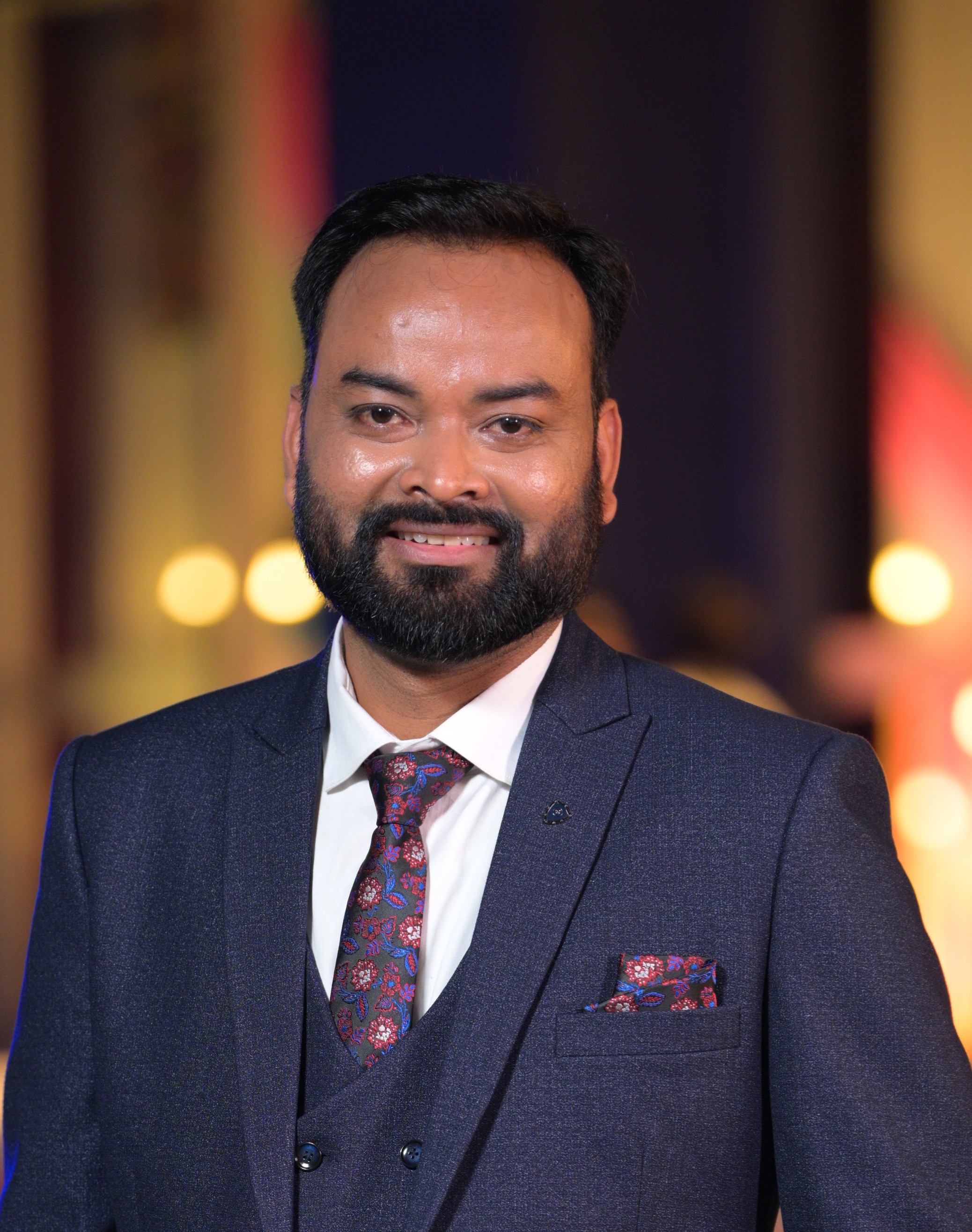

Could you describe your academic journey and what led you to pursue a PhD?
My journey into research began with a foundation in Mechanical Engineering in India, where I completed my Bachelor of Technology. My academic and teaching experiences strengthened my interest in understanding how engineering principles can be applied to real-world challenges. With a desire to broaden my knowledge and gain international academic experience, I moved to France to pursue a Master’s degree in Robotics and Intelligent Transport at the University of Lille and Centrale Lille. Studying in a new academic environment exposed me to different perspectives and approaches to engineering, gradually encouraging me to explore scientific questions beyond conventional solutions. My growing curiosity and desire to contribute to original scientific research motivated me to pursue a PhD, where I could investigate complex engineering problems independently. Acoustics offered an opportunity to build on my mechanical engineering background while exploring how ultrasonic waves could help detect hidden damage in materials.
What was your PhD research about, and why does it matter?
My PhD investigated how ultrasonic waves interact with frictional defects in solid materials. Imagine a crack whose surfaces touch or rub against each other: it may be difficult to detect, yet its response to sound waves can reveal useful information. This is the idea behind the nondestructive testing applications that motivated my work. I studied these interactions using finite-element modelling and nonlinear acoustics, connecting the behaviour predicted by simulations with the interpretation of wave measurements. My doctoral work was carried out through the University of Lille and KU Leuven in Belgium, bringing together different research perspectives. I defended my thesis in December 2023. What I found especially rewarding was the need to move continually between physical understanding, numerical analysis and experimental evidence. The subject was specialised, but the broader goal was easy to relate to: helping engineers assess the integrity of structures and components more reliably.
What were the most important lessons and challenges during your doctorate?
One of the greatest lessons was that research rarely follows a straight line. A promising idea may produce an unexpected result, a simulation may need to be reconsidered, or an experiment may reveal something that the initial model did not capture. These moments require patience, critical thinking and a willingness to question assumptions. Working across disciplines was also a challenge: I needed to combine mechanics, acoustics, numerical methods and signal analysis rather than relying on a single area of expertise. Doing research in an international academic setting strengthened my ability to communicate with people from different backgrounds. Presenting work at conferences and preparing scientific publications helped me explain complex ideas more clearly. Over time, I came to see setbacks not simply as obstacles but as opportunities to improve a method or ask a better question. The doctorate taught me independence while also showing me the importance of discussion, feedback and collaboration.
What have you done since completing your PhD, and how does it influence your work today?
After completing my doctorate, I worked as a Research Engineer at IEMN, Université Polytechnique Hauts-de-France, where I worked on guided ultrasonic waves and the effects of temperature on measurements used for structural monitoring. Although the application had changed, the central challenge was familiar: understanding what influences a wave signal before using it to draw conclusions about a structure. The work helped me extend my experience in experimental methods, signal processing and data analysis. In September 2026, I joined ISAT at Université Bourgogne Europe in Nevers as an Attaché Temporaire d’Enseignement et de Recherche (ATER). I now contribute to engineering teaching through mechanics, acoustics, vibrations and vehicle-related practical classes. Returning to teaching after my doctoral and research experiences has been an important stage in my academic career. It asks me to translate technical knowledge into clear explanations and to connect equations with situations that students can observe in the laboratory. I see research and teaching as complementary ways of learning.
What advice would you offer to students considering a doctorate, especially abroad?
My first advice is to choose a subject that makes you curious enough to keep asking questions when the answers are not immediate. A PhD is not only about producing results; it is about learning how to define a problem, test an idea, recognise uncertainty and communicate evidence. Look for a supportive research environment, remain open to feedback and build relationships with people whose expertise differs from your own. For students considering research abroad, I would add that the experience extends beyond the laboratory. Working in another academic culture can challenge your habits and broaden your perspective at the same time. Do not be discouraged if you do not know everything at the start; learning is the point of the journey. Finally, keep an open mind about what comes after the PhD. Research, engineering and teaching each draw on the skills developed during doctoral training. Looking back on my journey from India to France, I believe that pursuing a PhD has not only strengthened my scientific expertise but also opened new opportunities for research, teaching and international collaboration. Above all, it has reinforced my belief that curiosity, perseverance and a willingness to keep learning are essential for both personal and professional growth.


Commentaires