


From seaweed and milk proteins to the electronics of tomorrow: a PhD journey across Europe
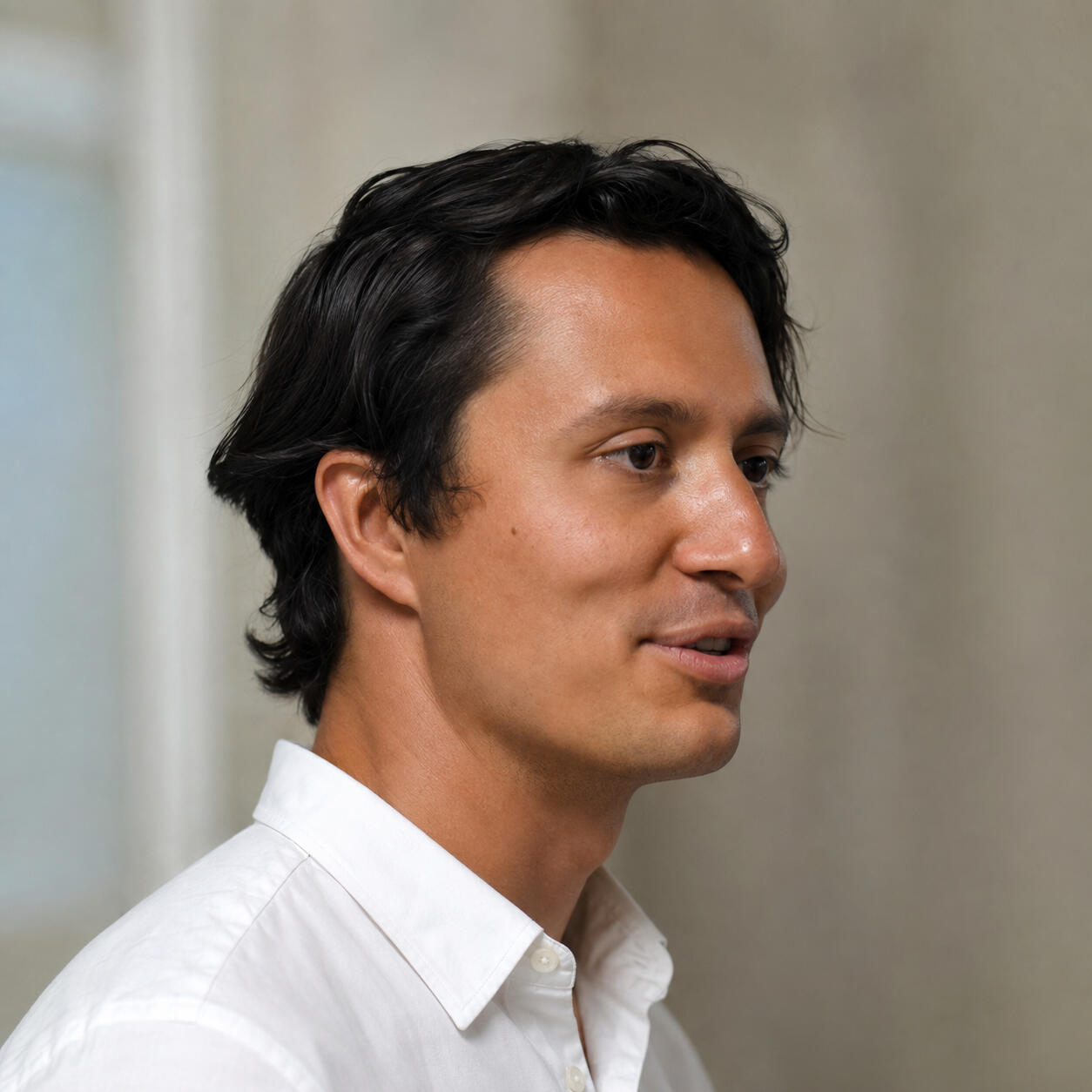

Postdoctoral Researcher | ISIS, University of Strasbourg & CNRS
Could you describe your academic background and what motivated you to pursue a PhD?
I am an Italian chemist, and I completed both my Bachelor’s degree in Chemistry and my Master’s degree in Supramolecular Chemistry, Materials and Nanosystems at the University of Florence. My background in physical and supramolecular chemistry led me to explore how molecular interactions can be exploited to design materials with specific macroscopic properties. I became particularly interested in natural polymers and in the possibility of giving these relatively familiar materials entirely new functions.
I started my PhD in Chemical Sciences in 2022 and defended my thesis, entitled “Biopolymer-Enabled Soft Electronics”, in February 2026. A major motivation for pursuing a PhD was the opportunity to connect fundamental chemistry with technological challenges. Understanding why a material behaves in a certain way is fascinating in itself, but being able to use that knowledge to design a functional device adds another dimension to research.
Why did you choose an international PhD under a cotutelle agreement?
My PhD was conducted under a cotutelle agreement between the University of Florence and the University of Strasbourg, under the supervision of Professors Massimo Bonini and Paolo Samorì. This framework allowed me to combine expertise in the physical chemistry of soft materials in Florence with research on functional nanomaterials and electronics at the Institut de Science et d’Ingénierie Supramoléculaires (ISIS) in Strasbourg, where I have been based since 2023.
The complementarity between the two laboratories was particularly valuable: the project required both an understanding of the materials at the molecular and structural levels and the ability to integrate them into electronic devices. Beyond the scientific aspects, working in an international environment means encountering different approaches to research, learning to communicate across disciplines and developing collaborations beyond one’s original institution. A cotutelle also brings additional organizational and administrative responsibilities, but it can offer a remarkable opportunity for scientific and personal growth.
How can natural polymers shape the future of electronics?
Conventional electronics rely heavily on rigid materials, whereas emerging technologies such as wearable sensors and electronic skin require materials that can deform and interact with the human body. Hydrogels, which are three-dimensional polymer networks containing water, offer an interesting approach to this challenge. Their softness and ability to transport ions make them attractive for applications at the interface between biology and electronics.
My research focuses on biopolymers such as alginate, obtained from brown algae, gelatin, derived from collagen, and caseinate, obtained from milk proteins. By controlling their interactions with metal ions or using enzymatic crosslinking, we can tailor their mechanical, electrical and physicochemical properties. During my PhD, we explored the potential of these materials for a range of applications, from wearable sensors capable of monitoring mechanical deformation, temperature and humidity to gel electrolytes for electrochemical energy storage. We also explored how biopolymer hydrogels can be combined with two-dimensional semiconductors to produce devices that mimic certain aspects of biological synapses.
An important objective is to identify design principles that can be transferred from one material system to another. Using naturally derived materials is a promising starting point for more sustainable electronics, although their environmental benefits must ultimately be assessed across the entire device life cycle.
What were the key achievements and lessons of your doctoral journey?
One of the most rewarding aspects was seeing a research project evolve from the preparation and characterization of materials into the development of functional devices. This work resulted in publications in international journals, including Advanced Functional Materials, Small and Materials Horizons. In 2025, I received the Young Researcher Award at the European Materials Research Society (E-MRS) Spring Meeting. In 2026, my doctoral work was awarded the Giovanni Semerano Prize by the Italian Chemical Society for the best PhD thesis in physical chemistry.
These recognitions were particularly meaningful because they came from communities with different scientific backgrounds. Presenting my work at international conferences also taught me the importance of explaining research to audiences whose expertise may differ considerably from my own. A doctoral project is rarely linear: experiments do not always produce the expected results, and new questions often emerge along the way. Learning to critically interpret results and adjust the research direction is just as important as achieving the original objectives.
What are your current research activities and long-term scientific ambitions?
I am currently a postdoctoral researcher in Professor Paolo Samorì’s group at ISIS, University of Strasbourg and CNRS, where I continue to investigate biopolymer-enabled soft electronics. I am particularly interested in ionotronics, a field that exploits the interplay between ionic and electronic charge transport to develop functional devices, including systems inspired by biological information processing.
I also wish to strengthen the international dimension of my research. In November 2026, I had the opportunity to present my work as an invited speaker at Jilin University in Changchun and at the Ningbo Institute of Materials Technology and Engineering of the Chinese Academy of Sciences. These experiences offer valuable opportunities to exchange ideas and identify complementary scientific expertise.
In the longer term, my ambition is to establish an independent research programme at the interface of physical chemistry, sustainable materials and electronics. I would also like to contribute to the training of young scientists. For prospective PhD students, I would emphasize the importance of choosing a research environment that encourages curiosity, critical thinking and progressive independence, while remaining open to opportunities beyond the boundaries of their initial project.


Commentaires