


The Human-Tech Nexus
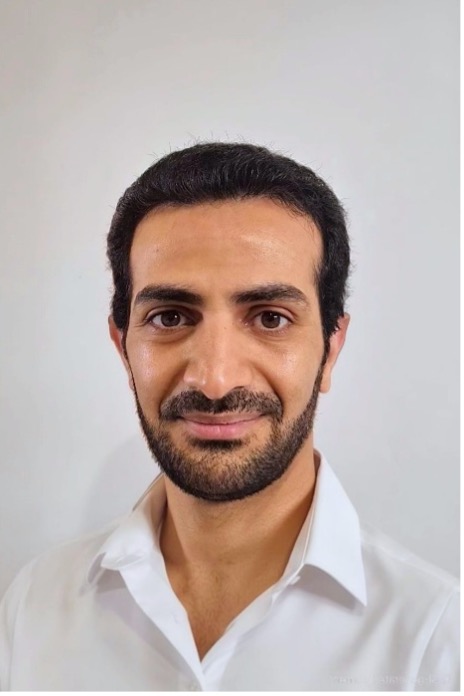

Milad POURSOLTAN
Merci beaucoup. pour votre témoignage.
The Thesis Journey and motivation
I completed my first master's degree in Industrial Engineering at the University of Jean Monnet in Saint-Étienne in 2018. After that, I pursued a second master's degree in Computer Science at Aix-Marseille University in 2019. I then found a thesis offer at the University of Bordeaux that required interdisciplinary knowledge to solve a new emerging problem in the integration of humans with technology, which is what motivated me to do the PhD thesis.
What is the story of your thesis in a few words?
My thesis provides a methodological framework for modeling and simulating Cyber-Physical and Human Systems (CPHS). CPHS are systems where computational elements, physical processes, and human users are deeply interconnected and interact with one another. Unlike traditional systems where humans are seen as passive users, in a CPHS, people are an integral part of the system, acting as active participants. This can be seen in various fields, including healthcare, manufacturing, and transportation, where the actions and decisions of people directly influence the system's performance. The integration of humans adds a layer of unpredictability and complexity that traditional models often fail to account for. To address this, my work proposes a three-layered approach: a purpose-centric layer for understanding the system's goals, a behaviour-centric layer for defining the simulation, and an execution-centric layer for implementation and testing. This framework is designed to help engineers and researchers create accurate and useful simulation models to enhance the design of complex systems in fields like smart manufacturing and transportation.
What are the key skills needed to complete a successful thesis?
To succeed in a thesis, I believe it's essential to have a blend of intellectual and personal strengths. We need to be a skilled researcher and analyst, able to dig into complex topics, interpret data, and build a compelling argument. On a more personal level, we have to be highly organized and disciplined, treating my thesis like a long-term project with a strict timeline. Most importantly, we need a lot of perseverance. The process is full of challenges, so my ability to stay adaptable, push through setbacks, and remain motivated will ultimately determine whether I can produce a successful, original contribution to my field.
What advice would you give to a student who wants to start a thesis?
I always stress a few key things. First, choose a topic you genuinely love—your passion will be your greatest fuel. Second, don’t wait for motivation to strike; instead, build a consistent daily routine to make steady progress. Third, remember to break the huge task into small, manageable steps to avoid feeling overwhelmed. Finally, I’d say communicate openly with your advisor and prioritize self-care, because this is a marathon, not a sprint.
What is your job today?
As a Scientific Officer in a consulting firm, I act as a scientific expert for our customers. I use my deep knowledge to help them solve complex challenges by analyzing and evaluating new technologies. My role is to serve as a bridge, helping clients make informed strategic decisions about the integration of new technological systems.


Commentaires