


Insight is built by thinking across multiple scales and integrating different levels of complexity
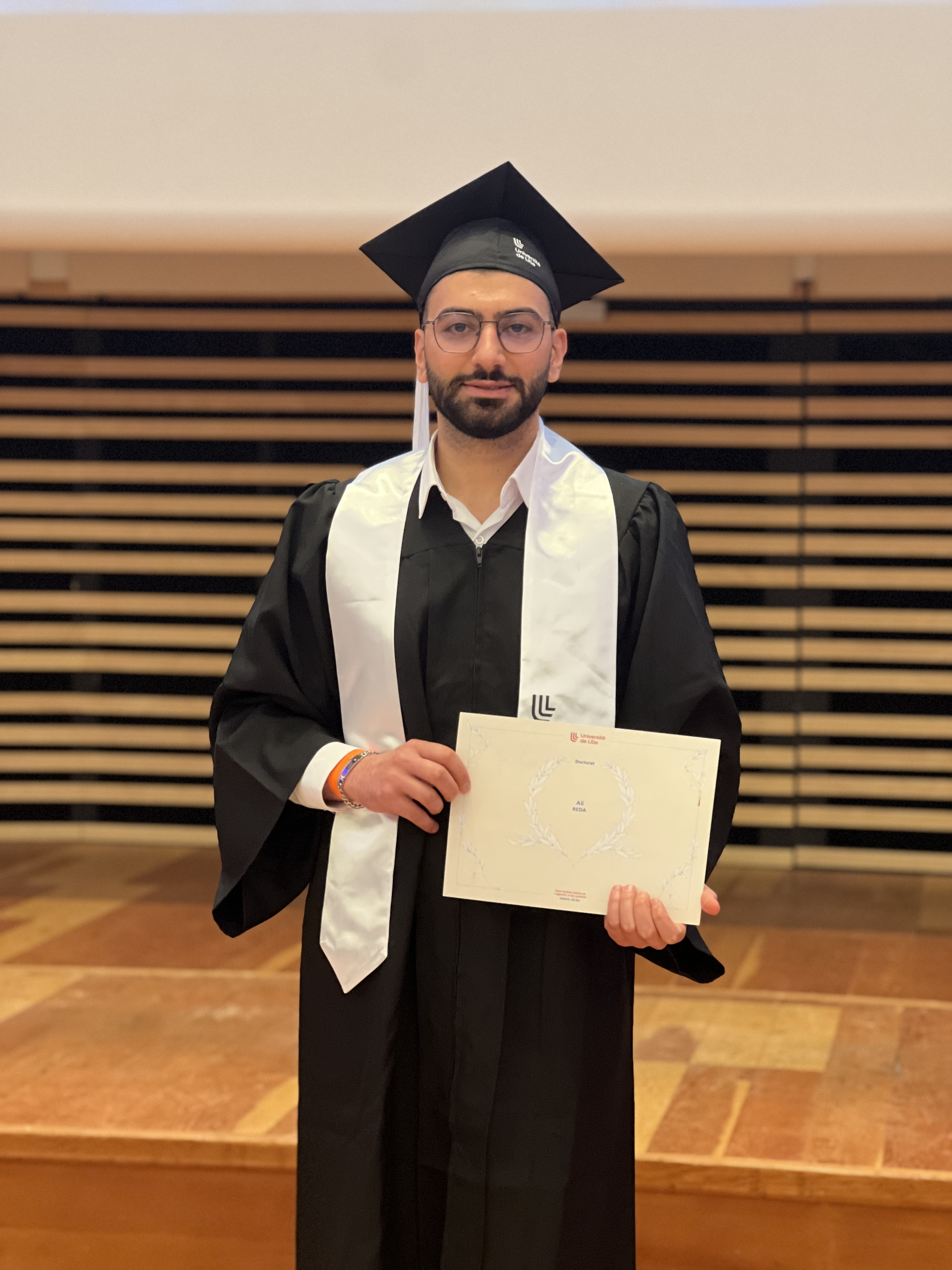

Merci beaucoup pour votre témoignage
Could you present your background and what motivated you to pursue a PhD?
I initially trained in cellular biology and physiology, where I developed a strong interest in understanding living systems and their underlying mechanisms. During my master’s studies, I became increasingly aware of the rapid emergence of nanotechnology and its potential to transform both biomedical and biological research.
Motivated by this evolution, I reoriented my academic path toward nanotechnology and completed a Master’s degree in Nanotechnology and Nanobiosciences in Grenoble, focusing on the interface between biology, physics, and engineering.
This interdisciplinary trajectory naturally led me to pursue a PhD in Nano microsystems and sensors in Lille, with a focus on plant biology integrated with advanced micro- and nanoscale technologies, aiming to develop experimental tools capable of bridging biological questions with physical measurement approaches.
In a few words, what was your PhD about?
My PhD focused on the development of experimental approaches to study flax dew retting using micro- and nanoscale technologies.
The initial objective was to design a microfluidic-based system for real-time monitoring of biological and biochemical processes during retting. However, as the project progressed, technical limitations related to biological variability and multiscale complexity required a reorientation of the research strategy.
The work therefore evolved toward a multiscale mechanical characterization approach, combining nano-, micro-, and macromechanical testing of flax fibers and stems. This made it possible to better understand the structural evolution of flax during retting and to identify mechanical indicators associated with optimal harvesting time.
Beyond fundamental insights, this work also contributed to the development of a field-deployable smart characterization tool combining mechanics, digital microscopy, and image analysis, within an Agriculture 4.0 framework. The PhD resulted in multiple peer-reviewed publications, including contributions within the Nature portfolio, as well as institutional dissemination and recognition.
In your opinion, what skills did you develop during your PhD?
My PhD trained me to operate in complex and uncertain research environments, where experimental constraints often require continuous adaptation of hypotheses and methodologies.
A key skill I developed was adaptability; the ability to redirect a research strategy while maintaining scientific rigor and a clear objective. This was essential in transitioning from a microfluidic biological monitoring approach to a multiscale mechanical characterization framework.
I also developed strong expertise in experimental design, multiscale data interpretation, and problem-solving in coupled physical and biological systems. In particular, I acquired a high level of precision in experimental execution and fine control of complex micro- and nanoscale experimental workflows.
In addition, I strengthened my scientific communication skills through peer-reviewed publications and interdisciplinary collaborations.
Overall, the PhD reinforced my ability to structure complex scientific problems, manage uncertainty, and transform technical constraints into research opportunities.
What is your current position and how is your PhD useful to you?
Following my PhD, I worked as a Postdoctoral Researcher and Technology Leader within an ERC-funded project focused on terahertz technologies and microfluidic systems. My work involved the fabrication of terahertz devices and their integration within microfluidic platforms, contributing to the development of advanced experimental systems for high-frequency sensing and biological characterization.
This role extended my interdisciplinary expertise, combining microfabrication, electromagnetic device engineering, and fluidic integration to bridge advanced physical technologies with biological and analytical applications.
I am currently a Process Development Engineer at MACOM, where I work on the development and optimization of fabrication processes for advanced semiconductor and high-frequency devices.
My academic and research background is directly aligned with my current activities. Both my PhD and postdoctoral experience provided strong expertise in microfabrication, multiscale experimental systems, and technology development in complex environments.
More broadly, they trained me to approach technical challenges with a rigorous, physics-based and data-driven mindset, while maintaining adaptability when facing industrial constraints. This combination of interdisciplinary research and technological development has been essential in my transition toward high-frequency and process engineering R&D.


Commentaires