


What if the future of tyres grew from a tree?
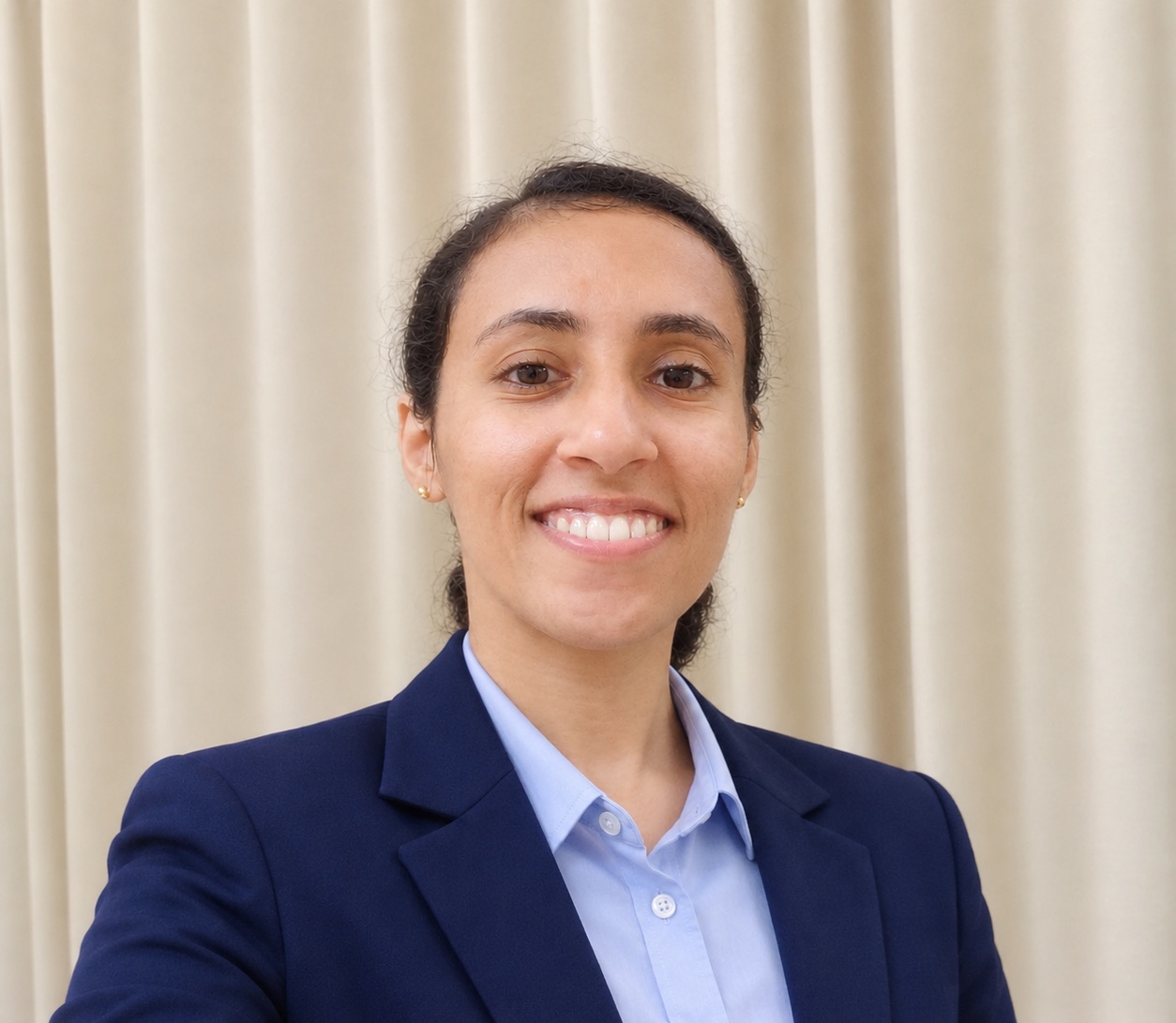

From the materials world to the tyres of tomorrow - a journey of challenges, discoveries and collaborations - driven by a vision of sustainable materials.
Can you tell us about your background and your thesis?
My academic journey began with a bachelor's degree in Polymer Engineering, followed by a master's degree in Polymer Technology. I was particularly fascinated by the versatility of polymeric materials and their ability to address challenges. Polymers are everywhere, though we rarely notice: from everyday objects like packaging, clothes, and shoes to highly engineered structures used in aerospace and biomedical engineering. This interest naturally led me to research, where I wanted to explore not only how materials perform, but also how we could design them differently to meet demands by understanding the mechanisms behind their behaviour. My research interest grew through the different projects I worked on before my PhD. Each project offered a new learning experience and introduced me to the process of investigating problems, conducting experiments, and interpreting results. I began to enjoy the uncertainty of research - that every experiment could lead to a new question or discovery. These experiences gradually inspired me to take the next step and pursue a PhD. My doctoral research was carried out through an international academic–industrial collaboration involving two universities in different countries and a tyre industry. My research focused on the development of sustainable rubber composites for tyres, which must meet several demanding and contradictory requirements. The combination of fundamental science and practical relevance motivated me further. Beyond the scientific results, this thesis was a journey that allowed me to connect my background in polymer engineering with a broader field of materials science, while exploring a subject at the intersection of sustainability and industrial innovation.
What were the main challenges you encountered during your PhD?
Behind every scientific result were numerous experiments, adjustments, and questions that needed to be reconsidered. Sometimes, the results did not match our expectations, and we had to return to the fundamentals to understand what was happening and change the strategy. Over time, I learned to become more patient, to approach problems more critically, and to see difficulties as part of the process rather than as obstacles to progress. It was complex to handle the academic research from an industrial perspective, where factors like processing feasibility, reproducibility, performance requirements, and the potential for scale-up need to be considered.
How did your collaborations shape your PhD experience?
This partnership brought together complementary academic expertise and industrial perspectives, allowing me to connect fundamental research with the practical challenges of tyre engineering. I learned to consider not only whether a material works, but also how it could be integrated into an existing system and what its limitations might be. The opportunity to exchange ideas with researchers as well as industry people helped me view scientific questions from different perspectives and reinforced my belief that collaboration is essential to developing meaningful solutions. Looking back, this experience was one of the aspects of my PhD that I appreciated most. It allowed me to work at the interface between fundamental research and industrial innovation, which is an environment I would like to continue exploring throughout my career.
What did your PhD teach you that you could not have learned from a textbook?
Explanations from textbooks may not be sufficient enough to answer a particular question and research begins there. You have to formulate hypotheses, design experiments, interpret results, and sometimes accept that your initial understanding was incomplete. One of the most valuable lessons I learned was to develop a critical perspective. An experiment does not simply provide an answer; it provides evidence that must be interpreted carefully. Beyond the scientific aspects, I learned patience, adaptability, and perseverance. I became more comfortable with uncertainty and more confident in approaching complex problems. Looking back, I am proud not only of the research I carried out, but also of the person and researcher I became through this experience.
What are you working on now, and where would you like your research to take you?
After completing my PhD, I wanted to continue exploring sustainable polymer materials and rubber technology. I am currently working as a postdoctoral researcher at Prince of Songkla University within a collaborative project with another tyre company. This position allows me to continue working on challenges related to tyre engineering while broadening my scientific perspective and exploring new research directions. Looking ahead, I would like to continue developing my expertise while contributing to research that connects fundamental materials science with industrial needs.
What message would you like to convey to doctoral students?
First of all, I would remind that we may not have all the answers but curiosity and determination to keep searching. It is important to believe in your research, even when the path seems uncertain. It is not a race, and the progress does not always happen at the pace we expect. The experiments may fail, need to be reconsider the hypotheses, and there may be moments when you question your own approach. Consider this as an integral part of learning how to do research. I would also encourage doctoral students to have a broader perspective. Research often does not involve a clear path; it is the curiosity to explore, the courage to question, and the perseverance that makes us move forward.


Commentaires