


A window into the invisible world: My journey through molecular simulations
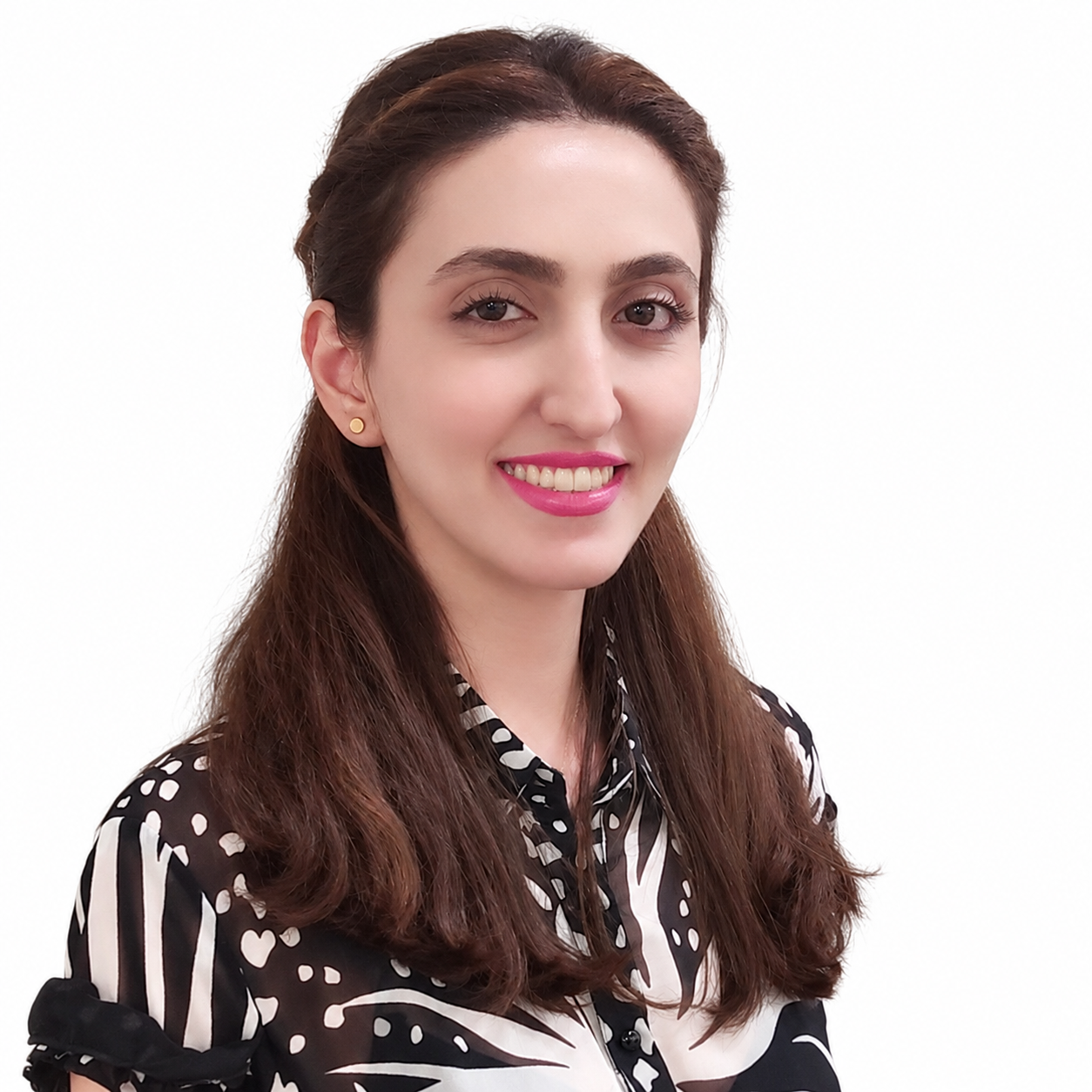

Merci beaucoup pour votre témoignage
Can you tell us about your scientific journey and what led you to pursue a PhD?
My scientific journey started in a field quite different from the one in which I eventually completed my PhD. I studied biotechnology and, during my Master's research, I was introduced to molecular dynamics simulations through a project related to Alzheimer's disease. I used these simulations to investigate how small molecules interact with amyloid-β peptides, which are associated with the disease.
It was my first real encounter with the molecular world through computation, and I found it fascinating. Instead of looking only at the outcome of a process, I could follow how molecules approached each other, interacted, and reorganized over time. It felt like gaining access to a world that would otherwise remain largely invisible.
After my Master's, I wanted to deepen my understanding of molecular simulations and challenge myself with new scientific questions. When I discovered the PhD opportunity at Sorbonne Université, I saw a chance to expand my computational skills while exploring a different research field.
But pursuing a PhD was about more than science. Coming from a biology background, I was entering the world of physical chemistry while also moving to a new country and adapting to a different academic and cultural environment. It meant leaving behind what was familiar and embracing a journey whose outcome I could not fully predict.
Looking back, moving to France and joining the PHENIX laboratory at Sorbonne Université gave me the opportunity not only to grow as a scientist but also to discover new strengths in myself. I learned that stepping outside my comfort zone, although sometimes intimidating, could open doors I had never imagined.
What can molecular simulations reveal that is difficult to observe experimentally?
One of the things I find most fascinating about molecular simulations is that they allow us to explore processes that are difficult to observe directly in experiments. We can follow how atoms and molecules move, interact, and organize themselves into larger structures. Experiments provide essential information about materials and their properties, while simulations offer another perspective on the molecular mechanisms behind what we observe. I see these approaches as complementary.
During my PhD, I used atomistic molecular dynamics simulations to investigate the nucleation and growth of ZIF-8, a porous material known as a metal-organic framework. My research explored the molecular mechanisms involved in these processes and how factors such as solvent, temperature, and concentration influence them.
What excites me most is the possibility of looking beyond a material's final structure and exploring the molecular events that contribute to its formation. It is a little like watching a story unfold at a scale that our eyes cannot see. For me, that is the beauty of molecular simulations: making the invisible more understandable.
What did your PhD teach you that you could not have learned from a textbook?
Textbooks often present science through established knowledge and well-defined methods, but research taught me that finding answers is rarely straightforward. During my PhD, I learned to deal with uncertainty, question my assumptions, and reconsider my approach when things did not go as expected.
I also came to appreciate the importance of scientific discussions and collaboration. Exchanging ideas and receiving constructive feedback helped me look at problems from perspectives I might not have considered on my own.
Perhaps the most valuable lesson was that being a researcher does not mean having all the answers. It means being willing to ask questions, acknowledge what you do not know, and keep searching for a better understanding.
What kept you going when research became difficult?
Curiosity and determination kept me going through many of the challenging moments of my PhD. Research does not always progress as expected, and sometimes even a small step forward requires considerable patience. What motivated me was the desire to understand my results and find a way through the problems I encountered.
At the same time, I learned something important about myself: perseverance does not mean pushing yourself without limits. There were moments when I needed to step back, manage my stress, and remember that taking care of my well-being was just as important as making scientific progress.
Over time, I began to understand that rest and balance are not obstacles to productivity. They are part of what makes sustained effort possible.
Looking back, I am proud of the research I contributed to, but also of how I learned to face difficult moments. Sometimes, moving forward means working harder. Other times, it means giving yourself the space to regain perspective and return with a clearer mind.
Where would you like molecular simulation to take you next?
Looking ahead, I would like to continue developing my expertise in molecular simulation while exploring new scientific challenges, particularly in biomolecular and pharmaceutical research.
My PhD gave me a strong foundation in computational chemistry, but I see it as a starting point rather than a destination. I am eager to study more complex biological systems, broaden my computational skills, and learn new methods.
I am especially interested in opportunities within the pharmaceutical industry, where molecular simulations can help researchers understand biological mechanisms and support drug discovery and development. I would love to contribute to a collaborative environment where people with different scientific backgrounds work together toward shared goals.
Ultimately, I hope to build a career that combines my curiosity for molecular science with research that can make a meaningful contribution to human health. What excites me about the future is not knowing exactly where science will take me, but knowing that there is still so much to explore.


Hyper intéressant